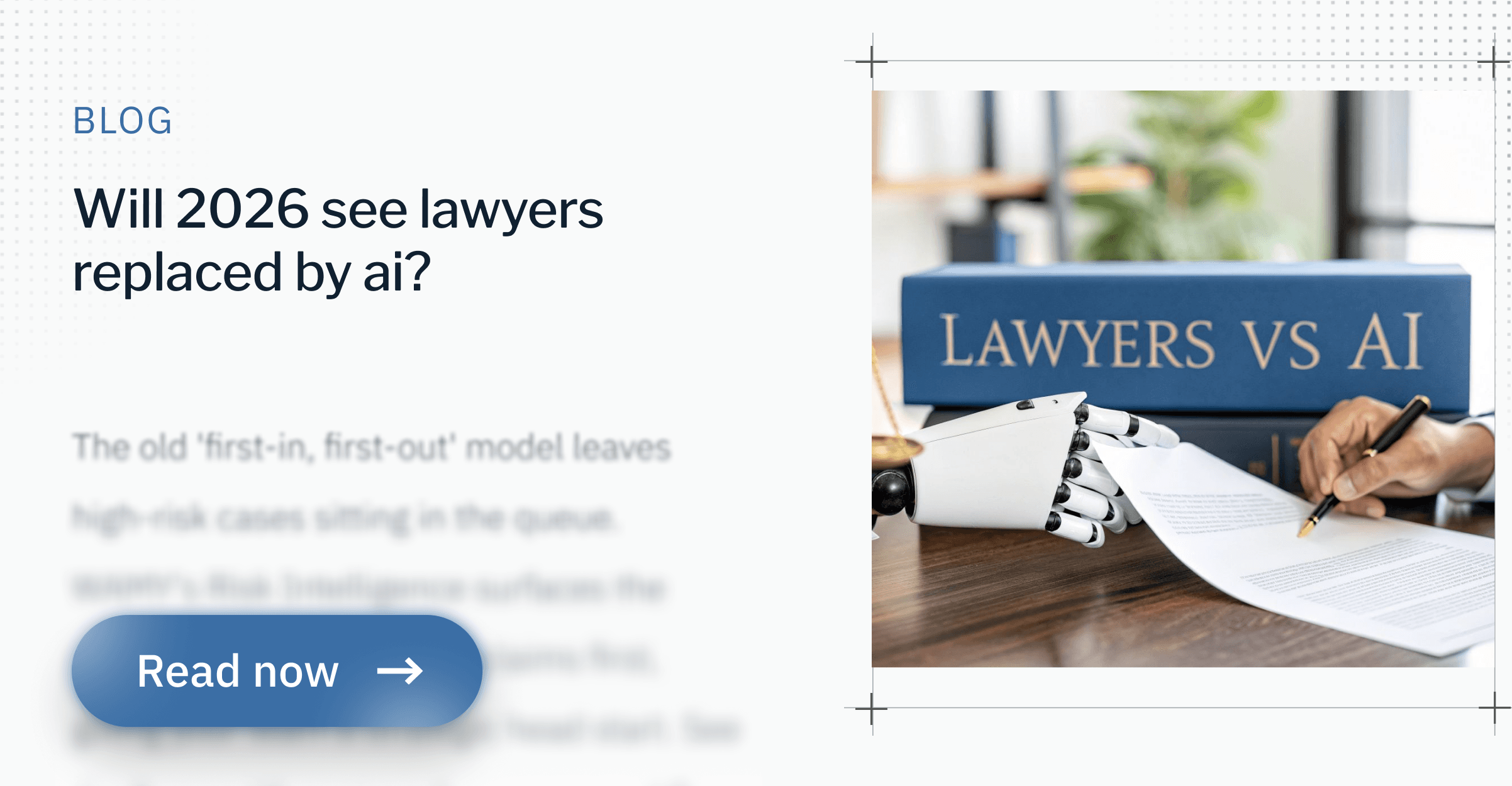
The short answer? A definitive no, lawyers will not be replaced by AI.
But make no mistake, the legal profession is in the middle of a massive shift, and the role of a lawyer is changing for good. The conversation has moved on from replacement to collaboration. It’s less about a machine usurping a lawyer’s job and more about AI becoming a hyper-efficient partner.
Your New Partner Is an Algorithm

The fear of being replaced by an algorithm is understandable, but the reality is far more nuanced—and frankly, a lot more interesting.
Instead of picturing a robot arguing in court, think of legal AI as a supercharged paralegal. Or, a better analogy might be an advanced autopilot for a seasoned pilot. The pilot—our human lawyer—is still firmly in command. They set the destination and make the critical calls on takeoff and landing. The autopilot just handles the monotonous work of maintaining altitude and course.
In the legal world, this means AI takes on the high-volume, repetitive work that eats up countless hours but requires very little strategic brainpower. This frees up human lawyers to focus on what they do best:
Crafting complex legal strategies.
Building trust and rapport with clients.
Navigating the delicate art of negotiation.
Making tough ethical judgments in gray areas.
How AI Is Changing Legal Tasks
So, what does this look like in practice? The key is to distinguish between tasks AI can fully automate and those it can only augment. Automation means the machine does the work independently. Augmentation means the human is still in the driver's seat, using AI to work faster and smarter.
Here’s a breakdown of how AI is reshaping common legal tasks in the insurance and P&C space.
Legal Task | Automated by AI (Machine-Driven) | Augmented by AI (Human-Led) |
|---|---|---|
Document Review | Automatically sorts, classifies, and flags thousands of documents (e.g., medical records, police reports). | Humans review AI-flagged documents to analyze context, relevance, and strategic importance. |
Legal Research | Scans millions of case files and statutes in seconds to find relevant precedents. | Lawyers use AI-generated research as a starting point to build a nuanced legal argument. |
Demand Letters | Generates initial drafts of demand letters based on structured case data. | Attorneys refine and personalize AI-drafted letters, adding strategic narrative and negotiation tactics. |
Case Summaries | Creates concise summaries of lengthy case files, depositions, and medical chronologies. | Adjusters and lawyers use summaries to get up to speed quickly, focusing their attention on key issues. |
Risk Assessment | Identifies risk factors in a claim file based on historical data patterns (e.g., litigation risk, fraud indicators). | Humans interpret the AI's risk score, applying their own judgment and experience to decide on next steps. |
E-Discovery | Processes and culls massive volumes of electronic data to identify potentially relevant information. | Legal teams review the AI-filtered dataset, making strategic decisions on what to produce or investigate further. |
This table makes it clear: AI excels at processing data, but humans are essential for interpreting it. The most valuable work—strategy, judgment, and client counsel—remains firmly in human hands.
The Real Impact of AI on the Legal Workforce
Contrary to the doom-and-gloom narrative of mass layoffs, the data tells a completely different story. The legal industry isn't shrinking; it's adapting, and in some areas, it's even growing.
Despite the hype around AI displacing professionals, one 2026 analysis actually found a 6.4% increase in legal sector employment. This stands in stark contrast to other industries that have seen headcount reductions due to automation.
This growth is happening because AI isn't just taking over old tasks—it's creating new efficiencies that expand the demand for high-level legal expertise. The professionals on the ground seem to agree. The same analysis showed that 77.4% of respondents shot down the idea that human-level artificial general intelligence (AGI) would be a reality by 2026.
Even more telling, 58.3% explicitly disagreed with predictions that AI would replace entry-level lawyers within five years, reinforcing the theme of collaboration over replacement. You can dig into more of these survey findings over at Artificial Lawyer.
This data paints a picture not of obsolescence, but of opportunity. The question is no longer if lawyers will be replaced by AI. The real question is how lawyers who master AI will completely redefine the standards of legal practice. The future belongs to those who learn to fly the plane with the best autopilot, using technology to amplify their uniquely human skills of strategy, empathy, and advocacy.
How Top Firms Are Putting Legal AI to Work Today

The idea of AI assisting in legal work isn't some far-off theory anymore; it’s happening on the ground, right now. The leading law firms and insurers have moved past the "what if" stage. They're actively using AI to unlock massive gains in efficiency, and the conversation has shifted. It's no longer about whether lawyers will be replaced by AI—it's about how AI-powered firms are simply outmaneuvering their competitors.
The adoption rate alone tells a powerful story. According to The State of AI in Legal report, a staggering 78% of the legal community now uses AI tools. This isn't a gradual shift; it's a seismic one that's happened over just a couple of years, with familiar names like ChatGPT and Microsoft CoPilot leading the initial charge. You can see the full numbers in this analysis of AI's surge in the legal industry.
Taming the Administrative Beast
At its most practical level, modern legal AI functions like a central nervous system for legal and claims departments. Think of the flood of unstructured data that hits a firm—emails, client portal messages, massive document dumps. Instead of a paralegal manually sifting through it all, platforms like Wamy ingest everything automatically.
AI transforms the initial, chaotic intake of a new claim or case from a major time sink into a streamlined, automated process. This isn't just a minor speed bump; it's about fundamentally changing how work begins.
For example, a platform’s Evidence Refinery can take thousands of photos, medical records, and police reports and instantly categorize them based on their legal relevance. What once took hundreds of hours of painful, manual triage now becomes minutes of focused, high-value analysis for the human expert.
From Data Grunt Work to Strategic Insight
But the most advanced applications do far more than just organize files. They actually start performing the initial strategic work, teeing it up for the human lawyer.
Key Real-World Applications:
Automated Document Review: AI can tear through thousands of pages of medical records or depositions, instantly pulling out key people, dates, and events to build an interactive case timeline.
Initial Risk Assessment: In P&C claims, AI gives a first-pass analysis, flagging files that have a high litigation risk or show signs of potential fraud based on historical data.
Evidence Categorization: During discovery, the AI can tag documents by issue, helping attorneys build their case strategy from an evidence set that’s already organized and ready to go. You can see exactly how plaintiff law firms are using AI in the discovery process to get a competitive leg up.
Drafting Routine Notices: The AI can generate solid first drafts of standard legal communications, like spoliation notices or requests for production, freeing up an attorney’s time for more nuanced and complex drafting.
This is where the fear of lawyers being replaced by AI really starts to fall apart. The AI isn't making the final call or crafting a novel legal argument from scratch. It's preparing the battlefield, organizing the troops, and delivering the intelligence report so the human general—the lawyer—can devise the winning strategy.
The Human Skills That AI Cannot Replicate
While AI is brilliant at churning through data and handling repetitive work, the heart of the legal profession is built on something else entirely. It’s built on uniquely human skills. An algorithm can tear through millions of documents in seconds, but it can’t replicate the complex, nuanced abilities that define a great lawyer.
The fear that lawyers will be replaced by AI misses the point. The most valuable legal work isn't about data—it's about humanity.
Think of it this way: AI is the world’s best research librarian. It can find the right book and open it to the exact page you need. But the lawyer is the strategist, the counselor, and the storyteller. The machine can’t understand the story’s emotional weight or use it to persuade a jury.
The Power of Empathy and Trust
A huge part of legal practice is building a relationship with a client. This goes far beyond just understanding the facts of a case. It requires genuine empathy—the ability to connect with a client on an emotional level, understand their fears, and build a real foundation of trust.
An AI cannot sit with a distraught client, offer genuine reassurance, or help them navigate the immense personal stress that often accompanies legal trouble. This emotional intelligence is the bedrock of the attorney-client relationship, a bond that technology cannot fake.
This human connection is everything. It’s how lawyers get clients to open up about sensitive information, align on tough decisions, and provide the counsel people truly need when the stakes are highest.
Strategic Judgment and Ethical Reasoning
Legal work is swimming in ambiguity and moral gray areas. AI runs on logic and patterns from its training data, but it has no real-world judgment or ethical compass.
Just think about these situations where a human lawyer is simply irreplaceable:
Strategic Negotiation: A seasoned lawyer doesn't just calculate—they read the room. They gauge an opponent's body language and know instinctively when to push and when to pull back. This isn't a data problem; it's a strategic art form built on intuition and years of experience.
Persuasive Storytelling: In a courtroom, a lawyer's job is to craft a narrative that connects with a jury. They weave together facts, emotion, and psychology to build a compelling argument. That's a universe away from an AI generating text. You can learn more about how technology can act as an artificial intelligence paralegal to help prepare the raw materials for that story.
Ethical Dilemmas: When faced with a complex ethical choice that has no clean answer, a lawyer must rely on their moral framework and professional duty. An AI has no skin in the game. It can't be held accountable or bear the weight of those decisions.
Ultimately, the most critical legal tasks demand skills that are intrinsically human. The conversation around AI replacing lawyers will surely continue, but the core roles of strategist, counselor, and advocate are here to stay.
Your Practical AI Implementation Roadmap
Thinking about bringing AI into your operations can feel overwhelming. It’s easy to picture a massive, disruptive overhaul. But that’s not how it works in the real world.
The smart approach is to forget the big bang and start small. Look for the specific, high-impact pain points that are bogging your team down right now. For P&C insurers, TPAs, and law firms, the goal is always the same: use technology to amplify your team’s expertise, not to replace it.
It all starts with identifying the most repetitive, soul-crushing tasks slowing you down. Think about the countless hours your best people spend just sifting through chaotic document dumps or drafting initial case summaries. These are the perfect places to start with AI. They offer quick wins and an almost immediate return on your investment.
From there, you can layer in more advanced capabilities. This isn't about flipping a single switch; it’s a methodical journey from automating the simple stuff to using sophisticated analytics that help your experts make faster, better-informed decisions.
A Phased Strategy for Insurers and TPAs
If your organization is drowning in high claim volumes, your first move should be to speed up intake and triage. The objective is simple: get claim files organized and assessed faster so your adjusters can get to work.
Centralize Intake: First, get a system in place that automatically pulls claim documents from all your different sources—emails, portals, and direct uploads. This simple step ends the manual “chase and gather” game and creates a single source of truth for every single claim.
Automate Triage: Next, use an AI tool like Wamy’s Evidence Refinery to instantly sort and categorize every piece of incoming evidence. This turns those chaotic document dumps into neatly structured, review-ready files. What used to take hours of manual work now takes minutes.
Introduce Risk Intelligence: Once your data is clean and structured, you can layer in AI-driven risk assessment. Tools like Wamy's Risk Intelligence can give you an initial claim confidence score right away, flagging the high-risk files that need to be escalated to a senior adjuster immediately.
A Focused Approach for Law Firms
For law firms, the biggest win comes from accelerating pre-litigation analysis and evidence management. The focus here is on using AI to build a stronger case, faster than ever before.
Accelerate Evidence Review: Instead of having associates burn days on mind-numbing document review, let AI process and tag evidence by issue. This gives your legal team an organized evidence set from day one, so they can jump straight into building a winning strategy.
Enhance Pre-Litigation Analysis: AI can digest thousands of pages of records and spit out a detailed chronology or summary in moments. This gives attorneys a bird's-eye view of the entire case almost instantly, letting them spot the critical strengths and weaknesses early in the game. You can see more examples in our guide on how Wamy's AI transforms the legal process.
While AI is brilliant at processing mountains of data, it’s crucial to remember what it can’t do. The real value of a lawyer lies in skills that a machine will never replicate.
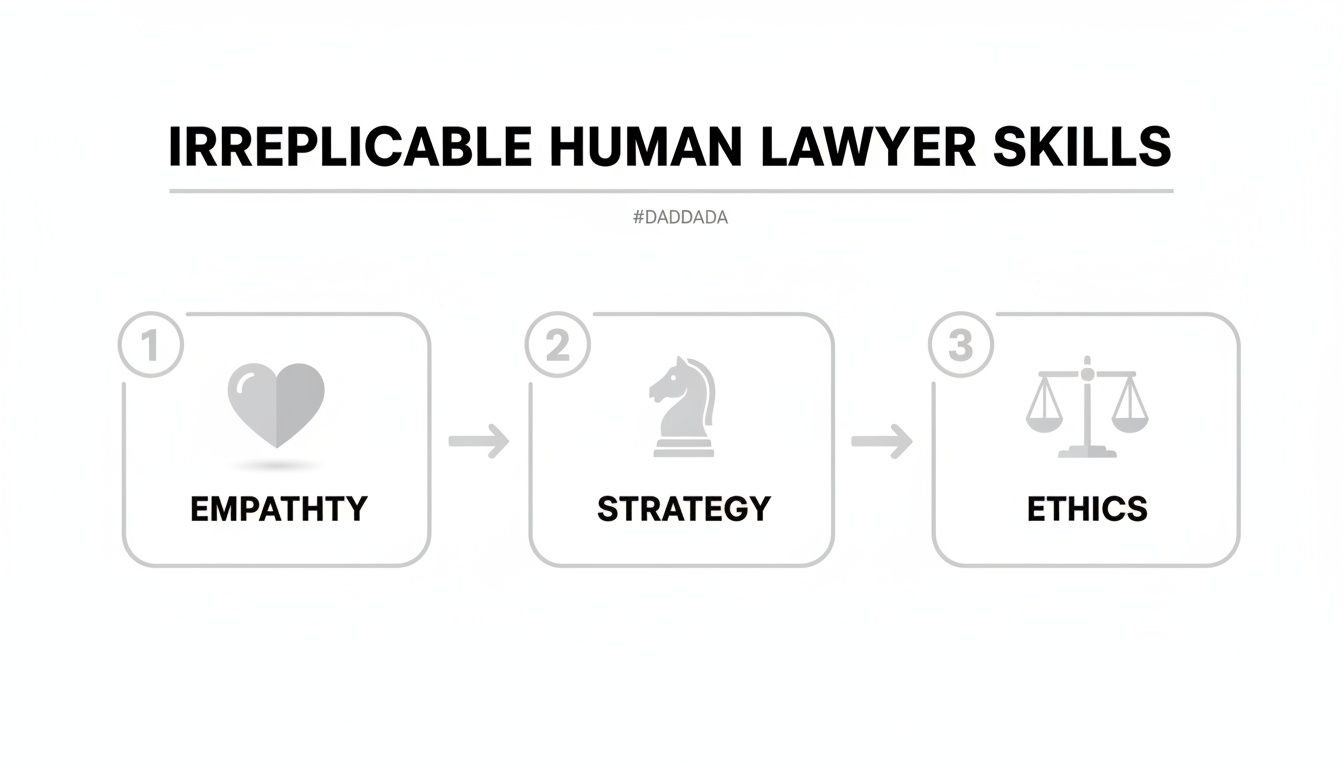
This gets right to the heart of it. The fear that lawyers will be replaced by AI misses the point entirely. Technology processes information, but empathy, strategic thinking, and ethical judgment are what define a lawyer’s true worth. Those are, and always will be, uniquely human.
Adopting AI is a journey, and having a clear, phased plan is the best way to get started. The table below outlines a practical roadmap for P&C carriers, TPAs, and law firms looking to integrate AI without disrupting their core operations.
AI Implementation Roadmap for Your Organization
Phase | Focus Area | Key Actions | Wamy Feature Example |
|---|---|---|---|
Phase 1: Foundation (Months 1-3) | Task Automation | Identify and automate 2-3 high-volume, repetitive tasks like document sorting and initial data entry. | Evidence Refinery for automated document categorization. |
Phase 2: Augmentation (Months 4-9) | Data Analysis & Summarization | Deploy AI to generate case summaries, chronologies, and initial risk scores to guide human review. | Case Summarizer to create instant, high-level overviews. |
Phase 3: Intelligence (Months 10-18) | Predictive Insights & Strategy | Use AI for deeper analysis, like flagging high-risk claims, identifying missing evidence, and suggesting next steps. | Risk Intelligence for proactive claim confidence scoring. |
Phase 4: Optimization (Ongoing) | Continuous Improvement | Monitor performance metrics, gather team feedback, and refine workflows to maximize efficiency and ROI. | Use platform analytics to track cycle times and adjuster workloads. |
By following a structured approach, your organization can build confidence and prove value at each stage. This isn't about replacing your experts; it's about giving them the tools they need to do their best work, faster and more effectively.
Navigating the Ethical Risks of AI in Legal Work
Adopting AI isn't just about boosting efficiency; it carries a profound responsibility. While the technology promises incredible speed, it also brings critical ethical and security challenges that every legal professional must get their head around. Ignoring these risks is simply not an option.
The whole conversation about lawyers replaced by ai often misses the most crucial point: accountability. When an AI makes a mistake, who carries the can? The answer is, and will always be, the human lawyer overseeing its work. That’s why getting to grips with the specific risks is so important.
The Dangers of Bias and Hallucinations
AI models are trained on massive troves of data. If that data is riddled with historical biases—and it often is—the AI will learn and reproduce them. An AI trained on biased past judgments could easily recommend biased outcomes, creating a legal and ethical minefield. This isn't some far-off theory; it's a documented weakness in many current AI systems.
Just as dangerous is the phenomenon of AI "hallucinations," where the model confidently fabricates false information. We’ve already seen this in the legal field, with attorneys sanctioned by courts for citing fictitious case law that a chatbot just made up. These tools can invent facts, misrepresent legal holdings, and generate text that looks plausible but is completely, utterly wrong.
The core ethical mandate is crystal clear: A lawyer cannot delegate their professional judgment or duty of competence to a machine. The final decision, and the ultimate accountability for its accuracy and integrity, must always remain with a qualified human professional.
Why the Human-in-the-Loop Is Non-Negotiable
To guard against these dangers, the gold standard is to maintain a "human-in-the-loop" workflow. This framework treats AI as an assistant, not a decision-maker. A human expert must always review, verify, and ultimately sign off on the AI’s output before it’s used in any official capacity.
Here’s what that looks like in the real world:
Fact-Checking: Every single citation, date, and factual claim an AI generates must be independently verified. No exceptions.
Bias Auditing: Legal teams have to stay vigilant, actively looking for signs of algorithmic bias in AI-driven recommendations or risk scores.
Strategic Oversight: It's best to treat the AI’s output as a first draft from a very fast but unqualified intern—it saves time, but it demands rigorous review and refinement by a seasoned pro.
Choosing the right platform is also a huge piece of this puzzle. General-purpose AI tools just aren't built for the high-stakes, high-security world of legal and insurance work. You can learn more about why general AI tools can be risky for property and casualty firms in our detailed guide.
This is why opting for an enterprise-grade, secure platform like Wamy is a critical step. It’s SOC 2 certified and designed from the ground up with legal workflows in mind, giving you the power of AI without exposing your firm or your clients to these significant risks.
The Essential Lawyer Skills for 2026 and Beyond
As AI takes over routine work like research and drafting documents, the skills that make a great lawyer are changing in a big way. The old fear of lawyers being replaced by robots is fading. In its place is a new reality: lawyers who master technology will replace those who don’t.
Success is no longer just about grinding through manual tasks. It's about strategic direction.
This shift turns the modern lawyer into a legal architect—someone who designs and oversees tech-powered workflows instead of just executing them. Rather than spending days buried in discovery, they’ll be focused on a completely new set of high-value skills.
The New Core Competencies
The legal professional of tomorrow needs to cultivate skills that work with AI, amplifying its power while covering its weaknesses. These abilities are strategic, analytical, and deeply human.
Legal Prompt Engineering: This is the art of asking AI the right questions to pull out precise, legally sound answers. It’s a make-or-break skill for getting valuable insights instead of generic, or worse, incorrect information.
AI Output Auditing: Lawyers have to become expert fact-checkers. This means meticulously reviewing everything AI produces—from case summaries to contract clauses—to spot "hallucinations," confirm factual accuracy, and make sure it all lines up with the right jurisdictional rules.
Data-Driven Strategy: AI opens up a firehose of data. The real skill is turning that data into smarter case strategy, whether that’s predicting an opponent's next move or getting a clearer read on litigation risk than ever before.
The most valuable lawyers will be the ones who can blend technological fluency with classic legal judgment. It’s about combining the speed of a machine with the wisdom and ethical accountability that only a human can provide.
Ultimately, the lawyer's future role is more powerful. They’re moving away from being manual laborers drowning in paperwork and becoming strategic thinkers who direct sophisticated AI tools to build stronger cases and secure better outcomes for their clients.
Your Top Questions About AI in Law, Answered
As AI starts showing up in more legal workflows, it’s only natural for questions and a bit of healthy skepticism to pop up. Let's tackle some of the most common ones head-on, so you can move forward with clarity and confidence.
Will AI Cause Law Firms to Hire Fewer Junior Lawyers?
Not necessarily, but the job description is definitely getting a rewrite. While AI is great at automating some of the classic entry-level grunt work—think sorting through mountains of documents—it’s also creating a need for junior lawyers who are tech-savvy. The new focus is shifting toward managing AI tools, interpreting their data, and providing critical oversight.
This actually allows them to skip over years of pure manual labor and start contributing to high-level strategy almost from day one. The job isn’t going away; it’s just becoming more strategic, faster.
Can AI Help with Actual Courtroom Strategy?
No, not in the way you might be thinking. AI is a powerhouse of a pre-litigation tool. It excels at analyzing case law, assessing the initial strengths of a claim, and arming a lawyer with data-driven insights before they ever set foot in a courtroom.
But the live, human art of trial work? That's a different story. AI can't read a jury's body language, pivot a narrative on the fly, or make the kind of gut-instinct strategic calls that can turn a case. Its role is to empower the lawyer in the courtroom, not to be the lawyer in the courtroom.
How Can I Ensure the AI I Use Is Secure and Compliant?
This is a big one, and security should be at the top of your list. You’ll want to stick with enterprise-grade platforms built specifically for the legal and insurance industries. Look for critical credentials like SOC 2 certification and proof of HIPAA readiness.
Always dig in and ask vendors about their data encryption, who has access, and what their security protocols look like. Most importantly, never run an AI tool without a strict "human-in-the-loop" workflow. This guarantees a qualified professional is always there to verify the AI's output for accuracy, compliance, and ethical integrity before any final decisions are made. It's the best way to protect both your firm and your clients.
Ready to turn your firm’s mountain of claim data into confident, audit-ready decisions? See how Wamy’s AI claims intelligence platform can help you resolve claims up to 4x faster.