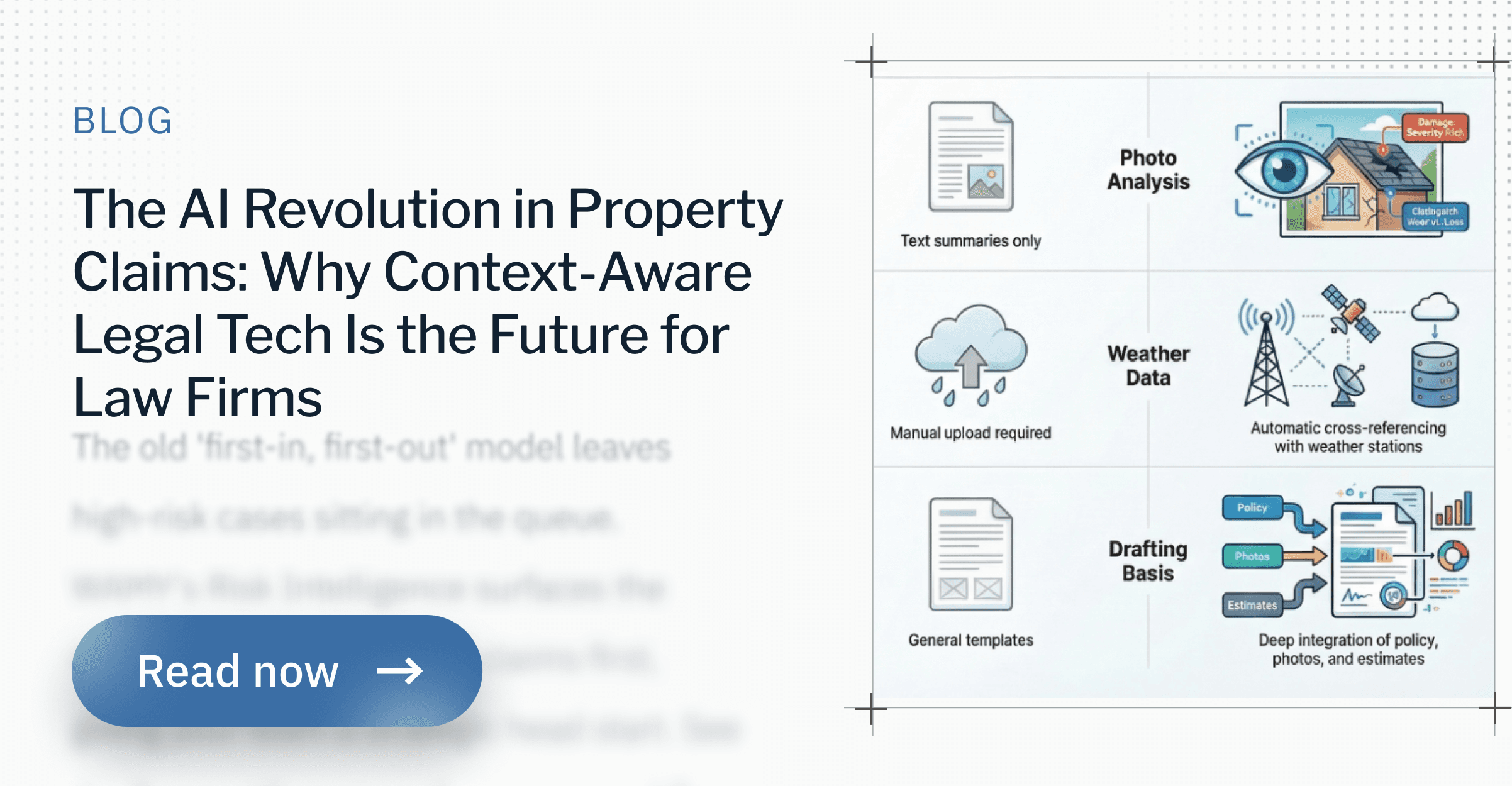
The legal industry is undergoing a major shift. For years, law firms handling property claims have been slowed down by heavy administrative work: reviewing 800-page insurance policies, manually entering data into case management systems, and cross-referencing weather reports with damage photos. While early AI tools promised relief, most acted as little more than advanced summarizers.
Now, a new generation of legal AI is changing that.
Platforms like Wamy AI are introducing a more advanced, context-aware approach to property claims. Instead of simply reading text, this kind of AI understands how different pieces of a claim connect, from a damaged roof and a weather event to policy language, estimates, and claim communications.
For law firms looking to reduce manual work, draft stronger legal documents faster, and scale without overwhelming staff, context-driven AI is becoming a real competitive advantage.
The Problem With Generic Legal AI: Context Is Everything
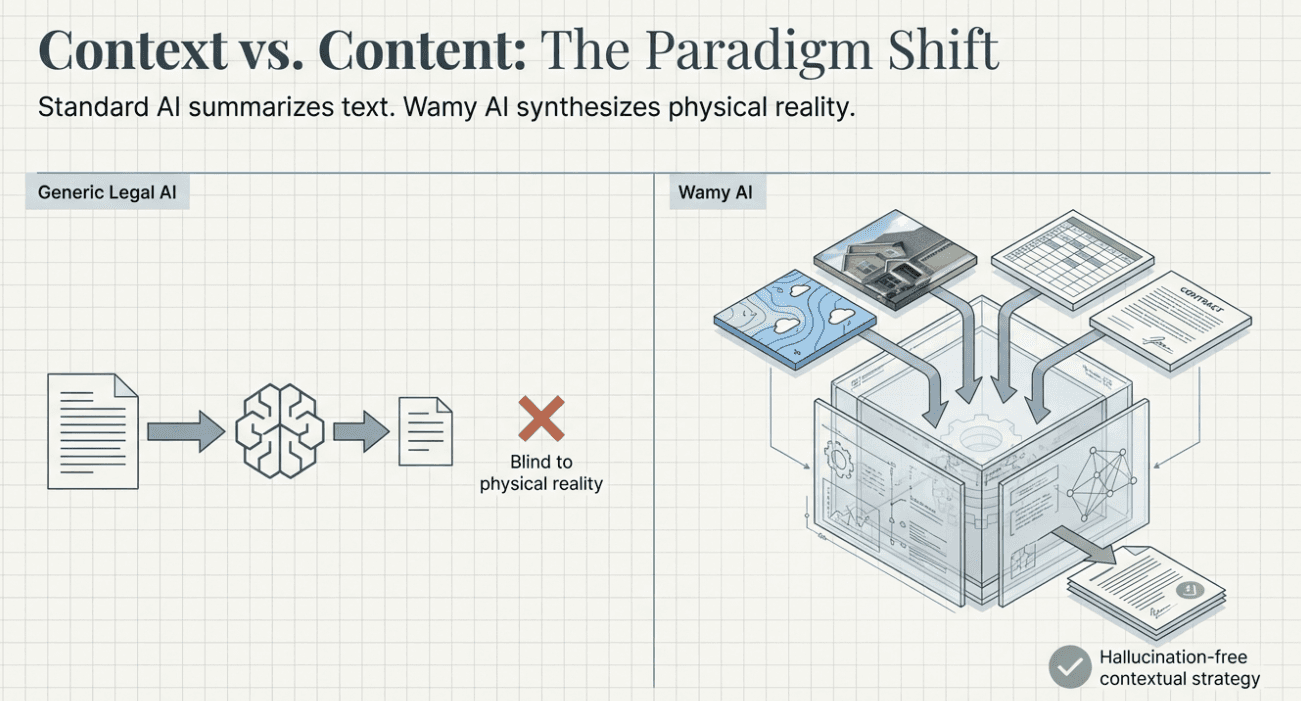
Many firms have already tested AI drafting tools. These tools can summarize a PDF or help rewrite text, but they often lack the domain-specific understanding needed for property claims.
If you upload a folder of inspection photos into a generic AI tool, it may describe what it sees, but it will not understand what those photos mean in the context of a wind claim, hail event, pre-existing damage, or a coverage dispute.
To deliver meaningful results, AI needs access to the full claim file and must be built to interpret it through the lens of property litigation. Context-aware AI can connect visual evidence, estimates, weather data, communications, and policy language into one cohesive analysis. That is what separates a basic drafting assistant from a true virtual claim analyst.
Banishing the Administrative Bottleneck With Smart Intake
Ask anyone in a property claims practice: manual intake and document organization are some of the most time-consuming parts of the workflow. They are repetitive, tedious, and vulnerable to human error.
Modern AI platforms can integrate directly with systems such as Litify, Salesforce, or Clio through two-way syncs. But the real value starts even earlier, before someone on the legal team has to touch the file.
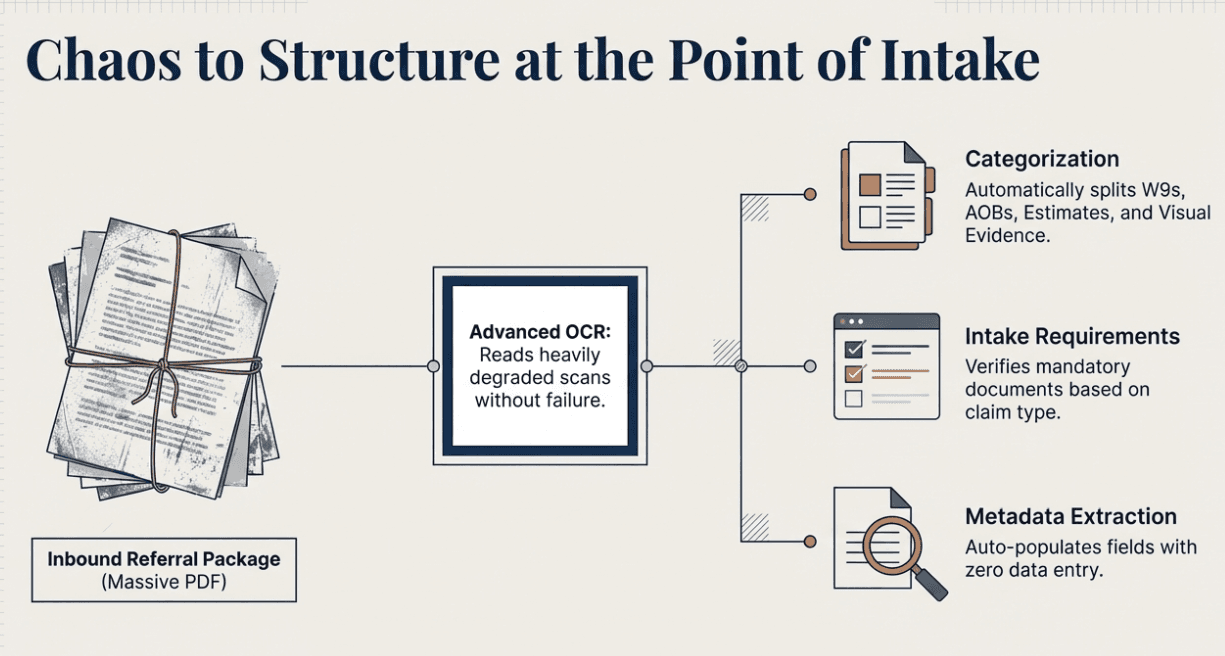
AI intake agents can monitor incoming emails and documents, process large referral packages, and organize them automatically. When a file comes in with zipped folders, scanned PDFs, estimates, assignments, photos, and invoices, the AI can split and classify those materials into clear sub-documents, making the case easier to review from the start.
The same approach can improve e-service handling. When a court order or legal notice arrives, the AI can identify the document type, extract key dates, calculate deadlines, and trigger follow-up tasks, reducing the need for staff to manually update calendars and workflows.
Seeing the Unseen: Computer Vision and Evidence Analysis
One of the most powerful developments in specialized property claim AI is its ability to analyze visual evidence.
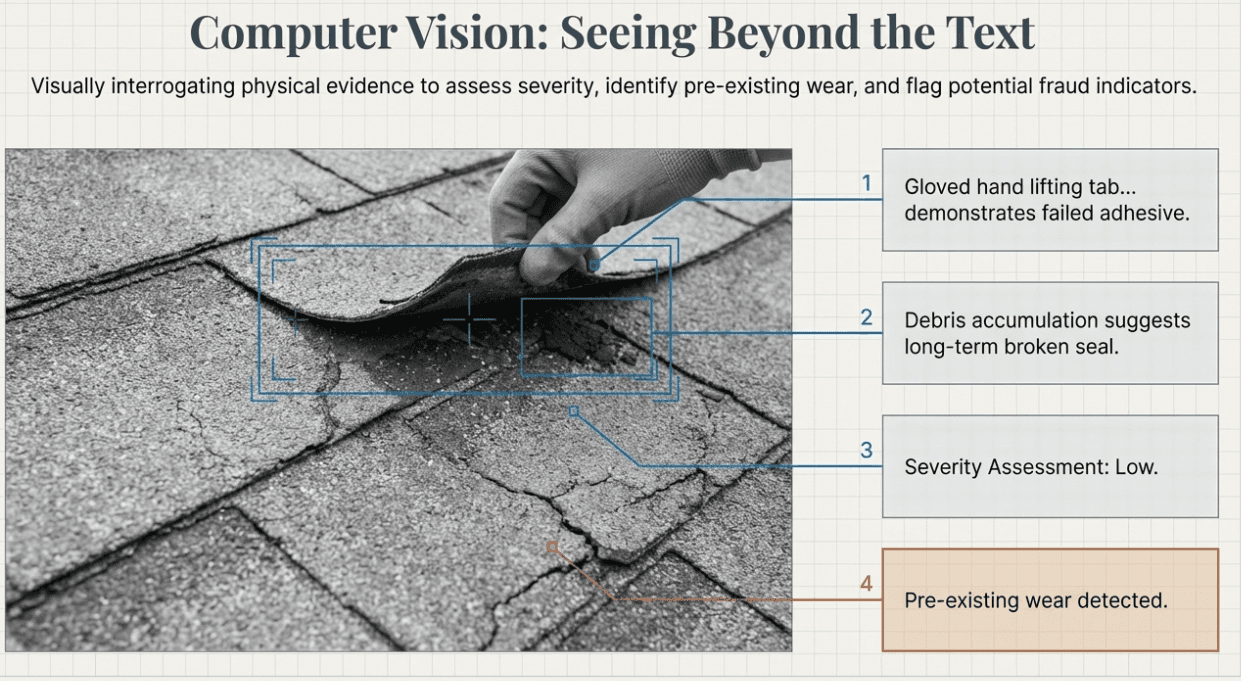
In a major property loss, firms may receive hundreds of damage photos. Reviewing them manually takes time and introduces inconsistency. Context-aware AI can evaluate those images in relation to the cause of loss and identify what matters.
For example, it can detect patterns that support wind damage, distinguish them from long-term wear and tear, and connect its findings back to the reported date of loss. It can also compare inspection photos with aerial imagery and weather records to validate whether the physical evidence aligns with the claimed event.
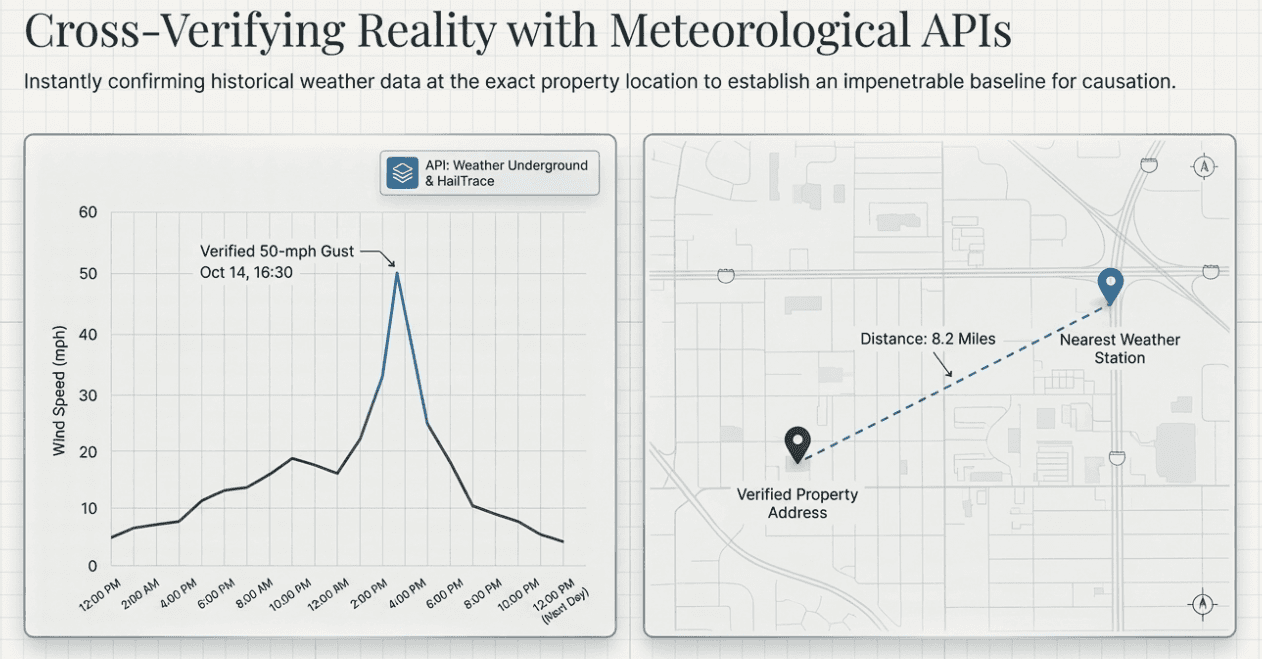
This becomes even more powerful when AI is connected to external sources such as weather data and historical imagery. Instead of relying on fragmented manual research, the legal team can work from a more complete and defensible factual picture.
Financial Precision: AI-Powered Estimate and Policy Analysis
Property claims often rise or fall on the details. Even small errors in an estimate or overlooked exclusions in a policy can materially change the outcome of a case.
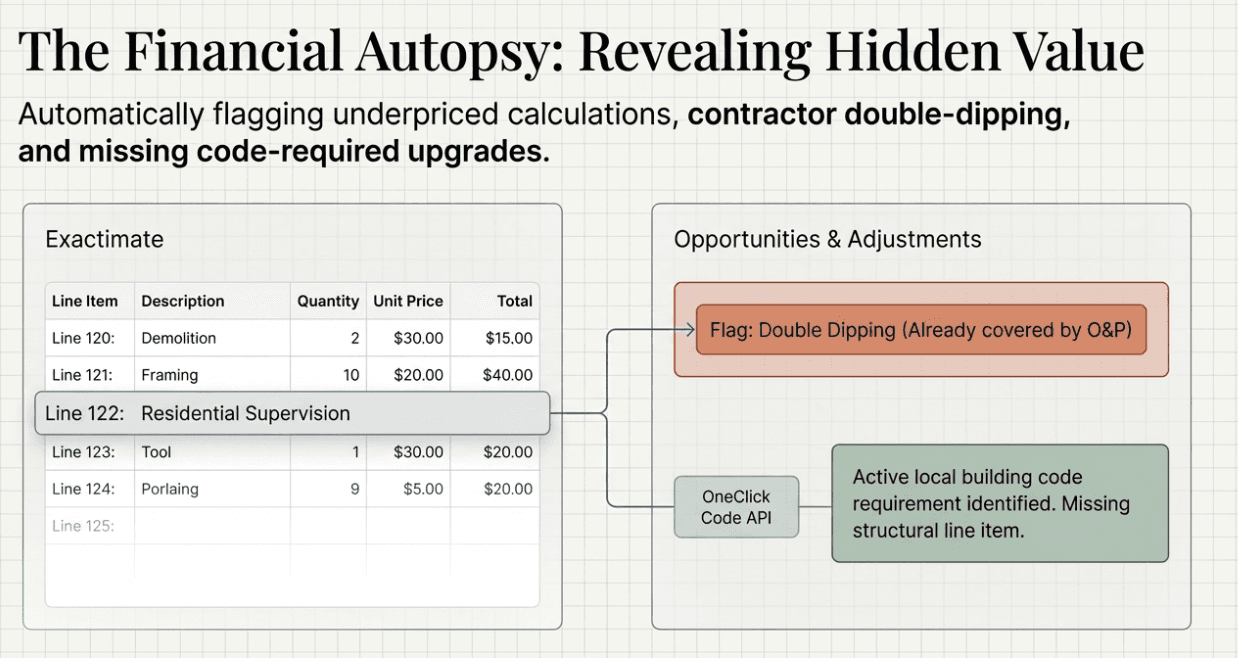
Context-aware AI can review estimates line by line, identify discrepancies, and highlight opportunities within seconds. It can flag duplicate charges, inconsistencies, unsupported line items, and potential overbilling. It can also compare scope and pricing against policy language to identify when something is excluded, limited, or potentially recoverable.
When combined with localized code and compliance data, this kind of analysis becomes even more useful. It helps firms justify upgrades, validate estimate logic, and build stronger demand positions with greater confidence.
Drafting With Intelligence: The AI Legal Companion
The real value of context-aware AI becomes clear when it is applied to drafting.
When all of the relevant claim data, including policy terms, weather records, estimate differences, visual evidence, invoices, and communications, is connected in one system, AI can draft with far more precision.
Instead of generating generic text, it can produce claim-specific work product grounded in the actual file. That includes:
demand letters
Civil Remedy Notices
discovery responses
claim summaries
internal case analyses
timeline-based bad faith support
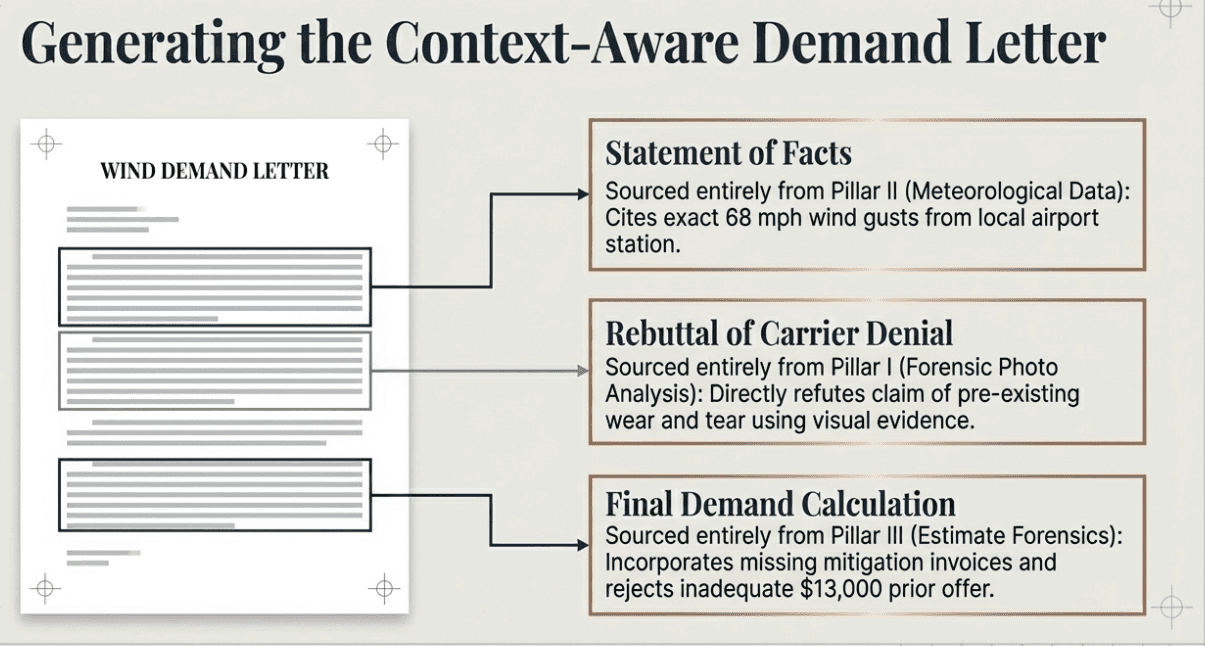
When asked to draft a wind demand letter, for example, the AI can pull in the relevant policy language, reference meteorological data, address denial arguments, incorporate damage analysis, and calculate a supported demand amount based on the best available estimate and supporting invoices.
This is where a platform like Wamy AI moves beyond drafting assistance and becomes a true legal workflow companion.
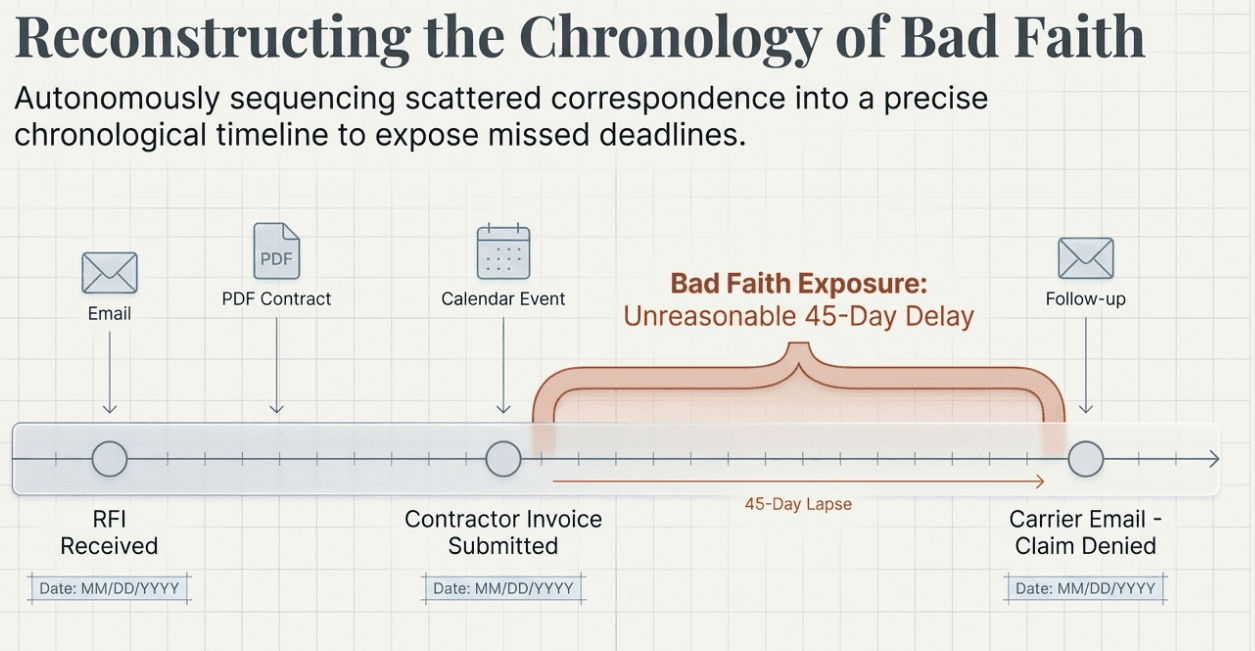
Reconstructing Claim Timelines for Bad Faith Exposure
In property litigation, timing matters. Delays in acknowledgment, investigation, payment, or response can create serious bad faith exposure. But reconstructing a claim timeline manually is often a slow and frustrating task.
Advanced AI can automate this process by building a chronological map of the claim from the documents, emails, invoices, and correspondence in the file. Instead of searching through scattered records, attorneys can quickly see what happened, when it happened, and where delays may have occurred.
This helps firms answer client questions faster, prepare litigation strategy more effectively, and support bad faith arguments with a clearer evidentiary foundation.
Repositioning, Not Replacing, the Legal Team
Whenever automation enters legal workflows, the same concern appears: will this replace staff?
In practice, the goal is not replacement. It is repositioning.
The best AI tools remove the lowest-value manual work, such as OCR-heavy document handling, repetitive data entry, deadline tracking, and formatting first-draft responses. That gives attorneys, paralegals, and support staff more time to focus on strategic work, case judgment, client communication, and litigation execution.
Instead of starting with a blank page, teams start with a highly informed draft. Instead of hunting for facts across disconnected documents, they work from a structured, searchable claim record.
That shift can reduce burnout, shorten ramp-up time for newer attorneys, and help firms scale their caseload without sacrificing quality.
Conclusion
The future of property claims litigation will not be defined by who can read the most documents or manually process the most files. It will be defined by who can turn complex claim data into action faster and more accurately.
Context-aware AI is making that possible.
By connecting intake, evidence analysis, estimate review, policy interpretation, drafting, and timeline reconstruction into one intelligent workflow, platforms like Wamy AI are helping law firms transform unstructured claim files into stronger legal outcomes.
For firms handling complex, document-heavy property claims, this is no longer just a technology trend. It is an operational advantage.
About Wamy AI
Wamy AI is a context-aware AI platform built for property claims workflows. It helps law firms and claims teams move faster across intake, document review, claim analysis, drafting, and timeline reconstruction by turning complex files into structured, actionable insights.
Whether your team is reviewing policies, organizing claim packages, analyzing visual evidence, or preparing demand letters, Wamy AI helps reduce manual work and improve speed, consistency, and accuracy across the claim lifecycle.
Ready to see how Wamy AI can support your property claims workflow?